
Diwa Spin India – Mobile Games, Android App and ₹500 Welcome Bonus
Welcome to Diwa Spin India, a mobile gaming platform built around quick entertainment, spin-style games and convenient account access for Indian users. Our platform combines colourful mobile games, simple navigation, Android app access, promotions and player support in one organised experience. Users can explore game categories from their smartphone, register or log in, check available rewards and manage important account functions without complicated menus. With the ₹500 Welcome Bonus for eligible new members and a mobile-first interface, Diwa Spin makes it easier to discover digital entertainment from compatible Android devices.
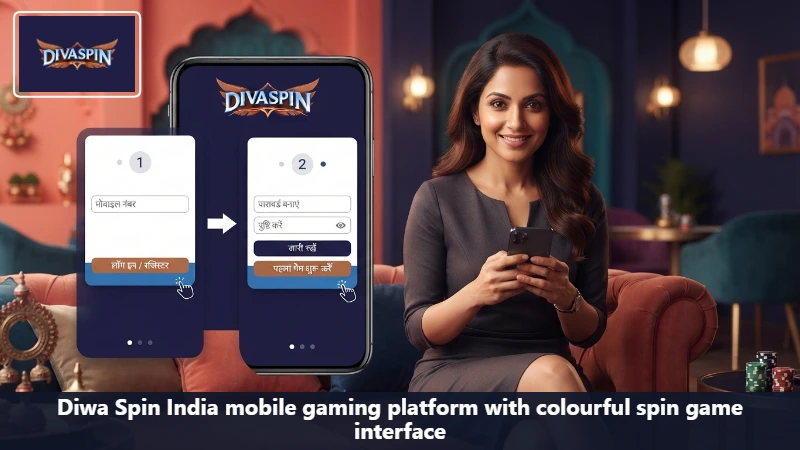
Diwa Spin India – Mobile Gaming Built Around Quick Entertainment
Diwa Spin is designed for users who prefer mobile entertainment that is easy to discover and simple to navigate. Instead of placing every feature behind several menus, the platform brings the main game lobby, account area, promotions and support together in a mobile-first structure.
Spin-style entertainment plays an important role in the platform identity. These games are designed around colourful interfaces, short rounds and straightforward controls that work naturally on smartphone screens. Additional mobile categories allow users to move between different game formats without leaving the main lobby.
Diwa Spin Platform Overview
Category | Platform Features |
Brand | Diwa Spin |
Market | India |
Platform Type | Mobile Gaming and Digital Entertainment |
Core Experience | Spin-Based and Quick Mobile Games |
Mobile Access | Android App and Browser |
Account Features | Registration, Login and Account Management |
Promotion | ₹500 Welcome Bonus |
Rewards | Referral, Cashback and VIP Information |
Payment Area | UPI and Account Transaction Management |
Support | Account and Technical Assistance |
Devices | Android Smartphones and Tablets |
The platform is particularly suitable for users who access entertainment primarily through Samsung Galaxy, Redmi, POCO, Realme, Vivo and OPPO smartphones. Chrome, Android apps, Wi-Fi and mobile connections such as Jio and Airtel all form part of the everyday mobile environment for Indian users.
A Lobby Designed for Fast Game Discovery
The main lobby helps users understand the available categories before opening an individual game. Clear game tiles and simple navigation reduce the need to move through several pages just to find a particular type of entertainment.
New users can begin by exploring the lobby, while returning members can move directly to recently used areas, account settings or promotions. This structure keeps the main Diwa Spin experience centred on games rather than making account management the first thing users see.
Explore Spin Games and Quick Mobile Entertainment
Spin games are a key part of the platform experience. Their appeal comes from simple interaction, colourful visual themes and relatively short rounds that fit naturally into mobile use.
Instead of presenting a complex table interface, spin-style games normally place the main controls in a compact area that can be understood quickly on smaller screens. This makes the category accessible to users who prefer casual entertainment rather than long sessions.
Spin Games for Short Mobile Sessions
Spin-based titles are suited to users who want to open a game, understand its main controls and begin exploring without learning a large number of rules first. Visual elements such as wheels, symbols, progress indicators and themed backgrounds help distinguish one title from another.
Users should still review the instructions available inside each game. Even when the interface appears simple, individual titles can use different rules, symbols or reward mechanics.
Casual and Quick Games
The lobby can also include casual game formats designed around short interactions. These may use puzzle, wheel, number or arcade-inspired mechanics depending on the available catalogue.
This category works well for users who browse on mobile during shorter periods, such as commuting or taking a break. A simple interface and quick loading time are especially useful on mid-range Android devices.
Card and Other Mobile Categories
Diwa Spin may also organise additional entertainment beyond spin-style games. Card-based or other casual categories can give users more variety when they want a different type of experience.
Rather than assuming every title follows the same rules, users can open the game information screen first and review the available instructions before entering.
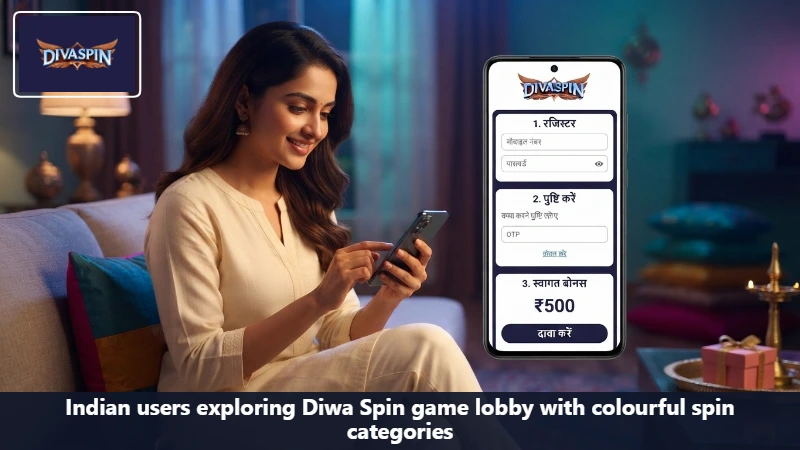
Diwa Spin App – Mobile Access on Android Devices
The Diwa Spin App provides a direct mobile environment for users who prefer application access rather than repeatedly opening the platform through a browser. Game categories, account functions and promotions can be reached from the same interface after installation.
Android users should check that their device has sufficient storage and a stable connection before downloading the app. The installation experience may differ slightly between phone manufacturers because Android menus are customised by each brand.
Using the App on Popular Indian Smartphones
Samsung Galaxy devices normally use One UI, while Redmi and POCO phones use Xiaomi’s customised Android environment. Vivo, OPPO and Realme also organise settings and installation permissions differently.
Despite these interface differences, the main experience remains similar. Users download the installation package, review Android permissions, complete setup and open the app from the home screen or application drawer.
Mobile Performance on Jio, Airtel and Wi-Fi
A stable network improves loading and keeps account sessions active. Home Wi-Fi is useful for installation and updates, while Jio or Airtel 4G/5G gives users mobile access when they are away from a fixed connection.
Switching rapidly between Wi-Fi and mobile data can occasionally interrupt a session. If a screen stops responding immediately after a network change, check connectivity before repeating an action.
Diwa Spin APK Download and Installation
Android APK installation requires a few additional steps compared with a standard app-store installation. The process is straightforward when the file is downloaded completely and Android permissions are reviewed carefully.
How to Install the APK
- Open the Diwa Spin download area on a compatible Android device.
- Select the Android APK option.
- Wait for the installation file to download completely.
- Open the APK from Chrome or the Downloads folder.
- Review the Android security prompt.
- Allow installation from the selected browser or file manager when required.
- Tap Install and wait for the process to finish.
- Open the app and review the main gaming lobby.
Samsung users may find downloaded files through My Files, while Redmi and POCO devices normally provide a File Manager. The exact menu names can change with Android updates.
Fix Common APK Problems
An “App Not Installed” message can occur when the phone has insufficient free storage or the APK was not downloaded correctly. Clear unnecessary files, confirm the package is complete and try installation again.
A parsing error can indicate compatibility problems or an incomplete package. Users should avoid downloading several copies of the same APK because this can make it difficult to identify the correct installer.
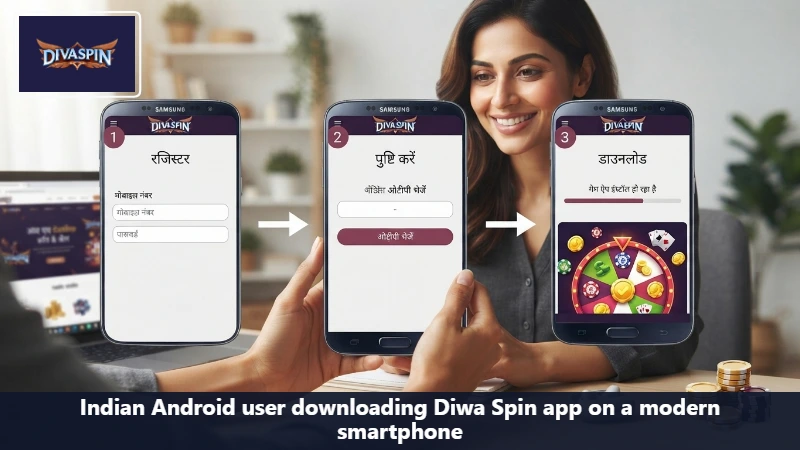
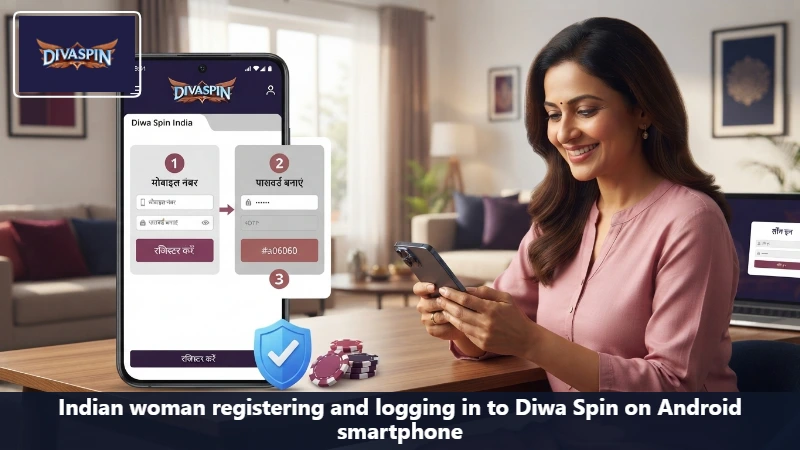
Create an Account With Diwa Spin Register
New users can create an account directly from the registration area. The form is designed to keep account setup simple on mobile screens and can include the information needed for identity and contact verification.
Registration Information
Field | Purpose |
Mobile Number | Contact and account verification |
Password | Protecting account access |
Confirm Password | Checking password accuracy |
OTP | Mobile verification |
Referral Code | Invitation information when available |
Terms Agreement | Account conditions |
Enter the mobile number carefully, especially when using a dual-SIM device. If OTP verification is required, make sure the registered SIM can receive SMS and enter the most recent code.
A unique password should be used instead of reusing credentials from banking, email or social media accounts.
Diwa Spin Login for Returning Users
Existing members can use the Login section with their registered account information. The process is designed to move users quickly from authentication to the gaming lobby and account dashboard.
If Chrome Autofill inserts an old password, remove the saved value and enter the current password manually. Users who change between Wi-Fi and mobile data during login should also check whether the session has reloaded.
Forgot Password or OTP Problems
The account recovery function can be used when a password has been forgotten. Follow the verification instructions and create a new password after confirming account ownership.
OTP delays can result from weak cellular reception or temporary SMS congestion. Dual-SIM users should check which number is registered before requesting another code.
Claim the ₹500 Diwa Spin Welcome Bonus
The ₹500 Welcome Bonus gives eligible new members an additional reward after completing the required account steps. Users can open the Promotions section after registration to review the offer and follow the qualifying process displayed on the platform.
The promotion area also helps users understand the current reward status, available campaign period and any account actions connected with the offer.
How to Check the Welcome Offer
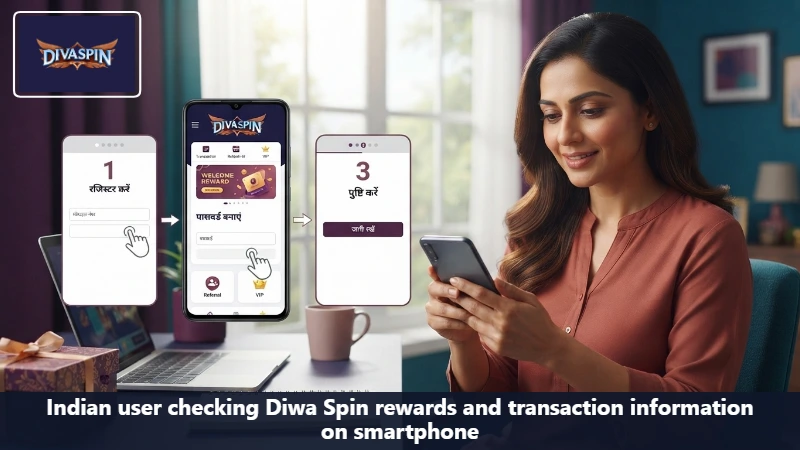
After account registration, open the Promotions or Rewards section and locate the ₹500 Welcome Bonus. Review the displayed requirements and complete the qualifying steps associated with the programme.
Once completed, return to the reward area and check whether the account status has updated.
Referral Rewards
Referral programmes can provide additional benefits when eligible friends join through the correct invitation process. If an account includes a referral code, use the code displayed inside the account instead of copying unrelated codes from outside sources.
Cashback and VIP Benefits
The rewards area can also include cashback campaigns and VIP programmes. Cashback offers may be linked to qualifying activity, while VIP tiers can provide different member benefits based on the current account level.
Users should review the relevant promotion screen to understand how each programme works.
Payments, UPI and Transaction Management
The account area is designed to make transaction information easier to review from mobile devices. Indian users are already familiar with UPI, mobile banking and transaction references, so these concepts can be managed through a familiar workflow.
State Bank of India, HDFC Bank, ICICI Bank, Axis Bank and Punjab National Bank are common financial institutions in India. Payment applications such as Google Pay, PhonePe, Paytm and BHIM are also widely used.
Users should follow the payment options displayed inside their active account rather than relying on details sent through unrelated messages.
Check Transaction Details
Before confirming a payment-related request, check the amount, method and account information shown on the screen. A transaction reference or UTR can help identify a payment later if support is required.
Pending Transactions
A pending transaction may indicate that processing has not yet completed. Avoid repeating the same request until the account history has been checked.
Keep the transaction date, amount and reference available when contacting support. Never share a UPI PIN, banking password or OTP.
Mobile Security and Customer Support
Account protection should remain part of everyday mobile use. Create a unique password, keep OTP codes private and use fingerprint, face unlock or screen PIN protection when available.
Users should also review application permissions during installation and avoid opening account links received through unfamiliar private messages.
Get Help With Common Problems
Technical support is easier when users provide clear information. For an app problem, prepare the device model, Android version and exact error message. For an account issue, explain the step where the process stops.
Transaction enquiries are easier to review when a reference number and date are available. Passwords, OTPs and banking security codes should never be included in a support message.
Responsible Mobile Gaming
Diwa Spin encourages adult users to treat mobile gaming as entertainment and maintain reasonable limits on time and spending. Choosing games you understand and taking regular breaks can create a more balanced experience.
Users should also review the rules that apply in their location before using individual gaming features. Account information should remain accurate, and users should never submit another person’s identity details during verification.
Frequently Asked Questions About Diwa Spin
1. What is Diwa Spin India?
Diwa Spin India is a mobile gaming platform centred on spin-style entertainment, quick mobile games, Android access, account features and member rewards for Indian users.
2. How do I download the Diwa Spin App?
Open the Android download area, select the APK option and wait for the file to finish downloading. Open the installation package, review Android permissions and complete the setup before launching the app.
3. How do I register and log in?
New users can complete the registration form with the information requested on screen and verify their mobile number when required. Returning members can access Login using registered credentials and complete additional verification if shown.
4. What is the ₹500 Welcome Bonus?
The ₹500 Welcome Bonus is a promotional reward for eligible new members. Users can review the current requirements in the Promotions section, complete the qualifying steps and check reward status through their account.
5. Can I use Diwa Spin on Samsung, Redmi or Vivo phones?
Compatible Android phones can access the platform through the supported app or mobile browser. The exact installation menus may differ by manufacturer, but the core experience remains similar.
Conclusion
Diwa Spin brings spin-style games, quick mobile entertainment, Android access and convenient account tools together in one organised platform for Indian users. Players can explore the gaming lobby, install the Android app, create an account, log in and check rewards such as the ₹500 Welcome Bonus from compatible mobile devices. The platform also provides transaction information, security guidance and customer support for everyday account needs. Explore each game category at your own pace, keep your login information private and use the mobile experience responsibly across Samsung, Redmi, Vivo and other Android devices.
18+ Responsible Gaming Notice: Diwa Spin is intended for adult users. Review the rules that apply in your location, maintain reasonable limits on gaming activity and keep passwords, OTPs, UPI PINs and banking security information private.
Next: Diwa Spin App